Wild Riparia Vineyard Jason Kesselring Vineyard
Jun. 20th 2026
DATE OF INTERVIEW:
INTERVIEW ID:
PV-ND-WINERY-03
YEARS EXPERIENCE:
27
STATE:
North Dakota
ROLE:
Grower, Winery
CULTIVARS:
Wild Riparia
In this interview, Jason Kesselring of Kesselring Vineyards shares the history of his family’s unique operation, which is distinct for being entirely dedicated to the cultivation of wild Vitis riparia. What began as his father’s casual foraging and experimentation with wild grapes near the Missouri River eventually evolved into a specialized six-acre vineyard operation. Kesselring explains that after early attempts to grow varieties from South Dakota failed due to hard freezes, the family shifted their focus to selecting, cloning, and propagating the most resilient local riparia specimens that had already proven their ability to survive extreme temperatures, including negative 45 degrees.
The conversation also highlights the practical challenges and innovative approaches required to manage a wild-growing crop. Kesselring describes the intense nature of his canopy management, which relies on mechanical tools like electric pruners and hedge trimmers to keep the vigorous vines structured, and notes the importance of timing the harvest to coincide with the first frost to properly reduce acidity. Beyond wine, Kesselring expresses a long-term vision to explore the full potential of Vitis riparia—including its use in juices, brandies, teas, and culinary applications—as he works to honor the heritage of a plant that has thrived on his land for thousands of years.
Tyler Bertsch: All right, this is Tyler Bertsch and I'm here with—
Jason Kesselring: Jason Kesselring, Kesselring Vineyards.
Tyler Bertsch: So, just to give a background, how did you get started into all this?
Jason Kesselring: It started really with Dad. He grew up on the Missouri and our family on that side always, they were foragers. They'd go out on expeditions and they'd be going along the banks of the Missouri, oddly enough really where Lewis and Clark were. I mean his farmstead was literally over the hill from where they camped during the winter. That's a weird- and it was later till I realized that as an adult because it's all wild out there. So he just got a love for the grape itself and they'd make jams, jellies. People would make their own fermented wine, I think, or they'd load it with sugar and it was a little not quite so- a little more rough and ready kind of wine. But he was really more about the grape itself. So he moved here and it was basically mid-80s we had this plot of land and he was always looking to find these grapes. Really he started planting a few just in our first plot, and it was about a row or two just to see if he could do it. He had no idea what he was doing, set it up.
Tyler Bertsch: All wild Riparia?
Jason Kesselring: Yep. And he was working with down in South Dakota, there’s a winery called Valiant Vineyards. They were making wild grape wine and he talked to them. He was intrigued by that. They sent up a few plants from South Dakota. Long story short, we set up the first vineyard, I want to say ’99, where it was nine rows and it was South Dakota vines. They lasted for a while, but we had a hard freeze and a while was probably five years. We had our first hard freeze and what happened there is he decided this isn’t going to work. They froze out. South Dakota is considerably different climate comparatively. And I was like, I found our first good plant by the bridge just over there and it was loaded with grapes every year. So we're like, "Why don't we use those?" We started going up into the trees and harvesting it initially and then we was making wine just on the side. It wasn't like we were doing it for the wine necessarily to start with. But he was like, "Well, let's just replace all these plants with ones that grow here." Because they're obviously surviving in negative 45 degrees and just handling it great. Because it was loaded with grapes and it just snowballed from there. We had ranch hands, we'd tell them to look out for grapes. They'd tag them for us. We'd go out in February, clone them, which is basically getting cuttings. We did that for I want to say three years and we got that established. We did two where we got- I'm trying to put it all together here.
Tyler Bertsch: So how many vineyards do you have now? Because you have them in sections, right?
Jason Kesselring: We did it in sections so we have four. It looks like one, two, but two started out, we basically I wrote a grant to see if we could get some money to establish the second one and we got that. So we were like, "Hey, so..." we did two and then the next year Dad was like, "Let's double it again." So it was three and then four was our- just we went to town and doubled the whole thing. So four is the newest and what we did there was that was our insurance policy for freeze out and everything.
Tyler Bertsch: So how many acres do you have now?
Jason Kesselring: Six.
Tyler Bertsch: Six? And that's all wild Riparia?
Jason Kesselring: Yep. So pruning is pretty intense. The timing is just what we can do. I'd prefer to do it a little bit earlier if I can. Then coming now, obviously they explode, so I let the canopy just develop all the fruit and then round July, beginning of July, mid-July start opening the canopy and just trying to get them manageable because they got everything shooting out everywhere. It gets, if it gets too clumped together then you got to worry about—
Tyler Bertsch: Do you use a weed whacker or do you just go in by hand?
Jason Kesselring: We did for years, I mean literally a decade by hand and that was brutal. So this last year after Dad he got really sick and I just got my boys but that's about it. We didn't really have- we lost our ranch hands. We got one guy that just has to do work on its own. So it was like I got to get something else. So Dad had years ago got an automatic pruner. So I used that because I just- my hands couldn't take it anymore. So I started using electric pruners last year and I've gone through a couple but they're really, really handy. They help a lot for that because it just would kill my hands and everybody else's. I use a hedge trimmer for this time of year, once it's in July.
Tyler Bertsch: That's what I was trying to say, a hedge trimmer.
Jason Kesselring: And that's great. I mean that- because then it's just you can open it up and it's not all this- not a jungle. Myself and the boys we can whip it into shape pretty well. It’s like depending on the rain and everything they grow like crazy and they're unforgiving. They almost want to fight back too. So it's a timing thing I've found. Like right now if I start getting too into it, they almost- it makes the growth crazier. It's like they want to just get more shooters and get that porcupine sort of growth going on, and it makes the cordons all gnarly. I went through this year from some of the old ones and had to cut off some cordons just so structurally everything's sound. The more structurally and- the wind and everything else coming into this stuff it just you're fighting that. I'd imagine in Nebraska you're very familiar with that. We'll have things growing like this.
Tyler Bertsch: Yeah, we got wild Riparia down there too. You're the only Riparia vineyard, right? Do you know of any others?
Jason Kesselring: No. I mean the thing is with the guys in Valiant they were the only people I've known that were making the wine and then we started supplying our grapes to them. That's kind of how we started with the winery is we were supplying grapes to them and they were doing that and then we're like, "You know what, let's start our own thing." I'd made enough and we just started. So it was an organic process and it was more about Riparia and then the honey with the meads is just the guy down literally half a mile from us, probably a mile, and he's got an apiary. So he's all Cheyenne Valley honeys so it was match made in heaven to utilize it. All your cuttings are from within your property basically right or around here? Totally, it's 100% our property right.
Tyler Bertsch: They've been here for thousands of years?
Jason Kesselring: Yeah, it's cool. Yeah, it's crazy. Some of them there's a weird variety, unfortunately you can't really see it too well. The differences in- I don't want to say variety, but some are bigger grapes, they have a slightly different look to them. I've talked to a lot of NDSU and people like that where they've claimed to have seen white ones. There's all sorts of weird folkloric myths.
Tyler Bertsch: I was going to ask you about that, have you ever seen the myth of the white Riparia?
Jason Kesselring: No, I've never seen it.
Tyler Bertsch: You're going to be the one to see it though, because you have the surface area, you have enough vines you maybe someday will.
Jason Kesselring: I hope so, I mean that would be pretty awesome to be able to find something like that. We go on the river a fair amount so I'm looking from that vantage point too, but really the best parts is going along the bank and maybe about 100 feet away. On the west side over there is where we've got some really nice grapes. That was the year where we were like- and the sad thing was, I don't know if it was sad, it was more like fortuitous really because we found it, we went in that February and got it and then the next year it just got attacked by animals during the- I think it was probably deer. I maybe that we have cows over there sometimes and I don't know if they just dig around or what, but it was gone. So it was like this kind of perfect timing. But we stopped doing it from the wild and just started doing it internally. So with Vineyard 1 we'd take the big producers, the ones that have big clusters and lots of clusters and we'd prune those- or not prune them but clone those in February. That's where 2 got a lot of its cuttings from and then by the time we were at 3 it's all internal. 4 is completely all the best from the vineyard. We haven't planted for a few years but we're just trying to get a handle on what we got right now.
Tyler Bertsch: That's a lot, six acres is a lot.
Jason Kesselring: Yeah.
Tyler Bertsch: So what, going into the scouting and foraging, what made you decide to take that genotype or pick that specimen? What were the traits you were looking for?
Jason Kesselring: You know really it was the cluster size. I guess just they got big grapes on them and well that's what looks like a good- and it looks like it's flourishing within the wild itself because sometimes you go in and you'll see them more stringy and looser. But there was some especially on the west side and that one on the by the bridge. I don't know if you came from the south or the north but it's the bridge right by us and that one had some really nice grapes on it too. It was just like it handled the extreme cold that year. I remember negative 45 that winter and so we were especially like "that thing's got to be a monster to handle that kind of stuff plus have all the fruit that following year." So that was one where we were just like "let's get it." And now it's died back a little bit. I don't know what the life cycles of these things are sometimes and what triggers it. You have the weird flooding events and sometimes I think that affects it in that way where good and bad. It's really just size and taste I guess. We try to- I think pruning though once you get in in the ground in a few years you're getting rid of that- the pruning helps with that weedy taste that is associated with the grape. Because even with our perimeter fence I was making wine off of that for a few years because we're giving all the grapes to Valiant and it was like "oh why do we get this kind of green apple thing going on?" Well I was using stuff that was really unpruned and once I added that plus the harvest after the hard frost is a total game changer. You can't do it before.
Tyler Bertsch: How do you manage that though? Like if let's say the first frost is really cold, like 20 degrees or something? Do you go out in the middle of the night and start picking? What do you do?
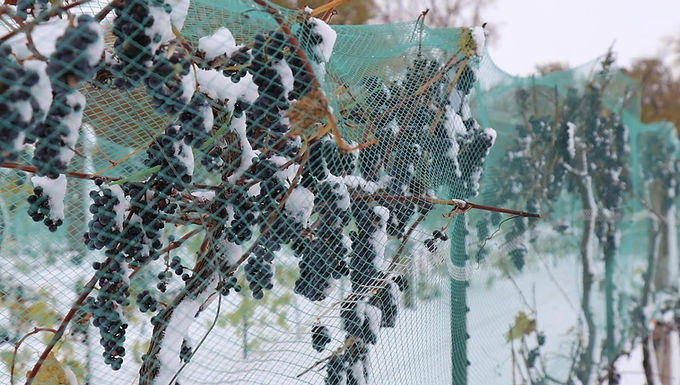
Jason Kesselring: No. What we do is if it's like- we've been lucky I suppose but it's been decades now so it's like what happens there. It'll be like a 28, I've hit- we've had snow. I mean one year it was snow and I have pictures of it and it's just drifts on the you know and it's like mid-October. But it quickly warms up so that first frost it's always round October 15th, 14th, sometimes later. We had one year it was September which really sucked. That was not a great year, I'll admit that, but we didn't know what to do. It was like it hit, spiked in September and then it went really warm. So it was like 75, even pushing the 80s and I'm like we got to get out there and just get what we can. Typically it goes like spike or even when it snowed that time, the snow was off by the following day, totally and it was back into reasonable weather.
Tyler Bertsch: But you got some cool pictures.
Jason Kesselring: Yeah, totally. And we just try to get- some of it was with Dad. He had a company so everybody would come out and volunteer that way. But now we just get local volunteers come out and it's a couple days, we feed them and get what we can get. This last few years we're more selective on what we take. Some years it's just- it can be a later. Generally it's the October 14th, 15th area. I mean almost you can set your calendar to it and it's hit that freeze and then we're out the next day, next two days. I'll give them probably two days.
Tyler Bertsch: And that just drops the acidity a lot?
Jason Kesselring: Yeah. And the thing is I think with the stems itself being dried out by that point really helps with any of that green quality to it. So the acidity drops, I think it slightly dehydrates because it's a little slack in the skin. It's not totally but some years I this last year I made a batch, I waited in Vineyard 1 some of the vines and I waited until January.
Tyler Bertsch: Like an ice wine or just- you just wanted to push it?
Jason Kesselring: Yeah. I wanted to see- well it was they don't totally freeze like you normally freeze. Like I think with ice wine in a domestic grape they're rock frozen. These they're a mushy- I don't know how to describe it. They're not rock like pebbles or anything.
Tyler Bertsch: Like a slushy almost? Like a harder slushy.
Jason Kesselring: So I'll put it in the press and then I'll add water to it because it is thick syrup. But my wife and Dad liked that, probably the best is just there's something about it there that I'm not totally sure on in my views. We'd need more to really have a real feel for it. That's more of internally to the family. I wouldn't really necessarily sell it because I don't- it's something I'm getting my head around yet.
Tyler Bertsch: So you make—do you pronounce it aperitif? Don’t laugh at me, people. It’s "The Nord," using local honey and wild grapes. What made you think to pair it with Cheyenne Valley honey? What was the thought behind all that? Because I think that’s cool.
Jason Kesselring: I don’t know if there was a huge thought. It was just we really liked the honey from the apiary there, and it was like, "Well, let’s back-sweeten it with that." Do you call it an aperitif or an aper-tif? It’s one of those things with labeling laws that they were like, "That’s what you’re going to call it."
Tyler Bertsch: Oh, really?
Jason Kesselring: Yeah, it had nothing to do with us.
Tyler Bertsch: What does it mean? Like dessert wine?
Jason Kesselring: Yeah, a dessert wine. That’s what it indicates, or something before or after you'd have a meal. That's what they wanted to call it. It’s funny because for "North Riverbank," the wild grape, nobody had ever labeled it that before. It wasn’t sanctioned. So I established that with the TTB as recognized as a varietal. Which is funny because everybody was like, "Don’t bother, they’ll never do it." And I did it. I just made a simple proposal, it wasn’t anything amazing. I was like, "This is where they sell it, they sell cuttings for this, it’s a viable varietal like anything else that’s growing out there." And they okayed it within the first go.
Tyler Bertsch: Nice. That’s nice. If I would say anything to somebody, it would be don’t listen to naysayers on it. What do you think people are missing about Riparia? Why doesn’t it get the—I know it’s got its challenges, but what are people missing out by not messing around with it or trying it?
Jason Kesselring: Honestly, I don’t know. I think there is some work to it. The pruning is one. I hear from people all the time that are like—and I don’t know if I’m like—they’re not getting anything out of it.
Tyler Bertsch: They’re not getting yield.
Jason Kesselring: Yeah, but we’re getting—there’s been years where on a plant I’ve had 45... we pushed 50 pounds one year, and I probably shouldn’t have done that.
Tyler Bertsch: 50 clusters?
Jason Kesselring: 50 pounds.
Tyler Bertsch: 50 pounds! Holy cow.
Jason Kesselring: And the thing is, that plant suffered because of that. I didn’t understand cluster overcropping, and it really was a blow. It was nuts because at that point especially, we used to do per plant because we had the manpower to do it where we would do per plant and track each one at harvest. Like last year, I can’t afford that right now because my dad passed and everything else. So it’s like we just gotta—we can’t—those are luxuries to do each plant. But there are some plants that will just totally put it out. And then I think in Vineyard 1, it took about two years to recover. I think it’s still recovering from some of that because it was just so much. The following years we were finding nitrogen problems in the soil, and we had to add nitrogen back in even though we’re surrounded by alfalfa fields and stuff.
Tyler Bertsch: Do you know a little bit of the lore behind it with Leif Erikson and Vinland? Wasn’t that the lore, that was the vine that he probably found?
Jason Kesselring: Yeah, I think most historians, if the historian has any knowledge of viticulture at all, they generally will go, "That’s wild grapes." The thing is, what I’ve run into—I haven’t run into many naysayers—but like, "Oh, blueberries," or maybe it was this. But they had a guy on the crew that worked in a vineyard.
Tyler Bertsch: So he would know.
Jason Kesselring: He would know between blueberries and a grape. And it fits the thing to me along that border between Canada and America.
Tyler Bertsch: And where it’s growing at makes sense that it would be Riparia.
Jason Kesselring: Right on the river, and he got lost and came back and they're like, "Wonder what that is?" And you know, it’s interesting because the Lewis and Clark connection too, which I didn’t think about so much, but with Dad, they were eating on those constantly during that winter and just on their voyage too. So it was a food source for them. There’s a thing about it where I’d like to work with NDSU more about finding out the grape as a superfood. There’s something about it that’s definitely—I swear, working in the vineyard around that time in harvest, I’m eating them more, tasting them more, and it’s long hours, but I never get sick.
Tyler Bertsch: I’m sure it’s a lot of Vitamin C, right? You would think. I don't know, I’m not a nutritionist, but I bet there's some good Vitamin C and anthocyanins and all that.
Jason Kesselring: I’ve talked to some people at NDSU who want to test it. And this year I’m going to have to take it in because they’re like—Greg was another one, he works at NDSU, he's like, "Gotta get this tested because there’s something really just—it’s got a lot of resveratrol and all the cancer-killing stuff in it." Where I think normal domestic grapes probably get it a lot from the skins itself and sitting on the skins, but what’s going on with the protein structure or whatever with the wild grape is fascinating to me because it’s like you pinch that thing and it’s blood red straight away. It’s got to be just an amazing healthy food for you in that way. And it sounds like it was to Indians, what I’ve read on that is they were using it more for medicinal reasons. The whole plant really, even the bark was used for a lot of the respiratory stuff.
Tyler Bertsch: They make dyes out of it, they make cordage with it.
Jason Kesselring: Yeah, so it’s a fascinating plant in that way. You can totally geek out about it.
Tyler Bertsch: Last question, where do you see this going in 10-15 years? What’s your dream?
Jason Kesselring: I think I’d like to try and not just wines but the juice as well. To start selling the juice. I’d like even—we’ve made beer in the past with it. I’d like to make a beer with it. We’re planning on distilling it as well, making a good brandy out of it.
Tyler Bertsch: That would be cool.
Jason Kesselring: So I want to do everything I can with that grape. I think it’s a different thing than a lot of wineries want, the diversity of grapes.
Tyler Bertsch: No, but I get what you’re trying to do. It’s like you said about the grape, like that’s the star of the show. I think that’s cool.
Jason Kesselring: And I think even with—we’re taking the grapes, last night we were harvesting the grape leaves and getting those to eat.
Tyler Bertsch: Yeah, they’re delicious. You make Greek little dolmades? Yeah, those are really good.
Jason Kesselring: Yeah, the tendrils are even wonderful in salads and stuff. So I really think the bark too is something I’d like to work with with teas. That, I’ve drunk it, my wife has, and my sons. There’s something to that. I’ve even used it for our own batches of wine as an experiment to add into the wine. You’re not oaking it, but you’re steeping it in there. And it adds an interesting almost sage-like flavor to meads, which is nice. We’re coming out with a wild grape mead soon too. So it's one of those things where mixing that honey and the environment around here. I think we want to open up to people as we talked to them where I think we want it to be more of a garden atmosphere and maybe not like a total winery per se like a traditional one.
Tyler Bertsch: Well, I’ll say you’ve inspired me. I’ve planted some wild Riparia in my trees. So yeah, I’m going to have a little small batch of it and I want to mess around with it because I do think that’s fascinating to use the genetics that were on my land for thousands of years just like you. It’s a maybe romantic or mythos behind it that is interesting.
Jason Kesselring: I think you can work with it, and I think more people that work with it a bit—I’ve talked to people in California, they’re fascinated by what we’re doing and it’s like you just work with what you got. That’s an approach that we take. Where Sean’s going to have more of the mad scientist approach. It’s really cool where he really gets into it.
Tyler Bertsch: Yeah, I'm looking forward to that. That’ll be a different conversation, it'll be exciting.
Jason Kesselring: Yeah, totally.
Tyler Bertsch: All right, well I don’t have any more questions. I really appreciate it.
Jason Kesselring: No, I appreciate you coming out. Thank you.
Tyler Bertsch: Yeah. With that, do the legalese. Is it okay if I post this on the website?
Jason Kesselring: Sure.
Tyler Bertsch: Okay. All right.