About
Why Prairie Viticulture?
Prairie Viticulture exists because grapes should not be forgotten here. By here, I mean the grape-growing prairie states of America—Iowa, Nebraska, Minnesota, Wisconsin, northern Illinois, and the Dakotas. Beyond the wines and grape varieties themselves, this region holds a rich and largely forgotten viticultural history—one built through trial, failure, and quiet determination—that the world has overlooked for far too long.
These states are bound together by a common agricultural reality—continental climate, open exposure, prairie soils, and a history of experimentation rather than inheritance. Unlike established wine regions built on centuries of continuity, prairie viticulture has always been interrupted, rediscovered, and reinvented. That shared fragility is what makes growing grapes here fundamentally different.
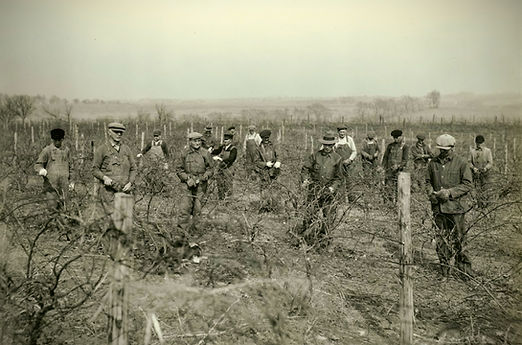
For more than a century, people across the upper Midwest believed they could grow grapes—and they tried. Again and again. They planted vines into sod that had never been broken.
They battled insects they didn’t yet understand, diseases without names, droughts that lasted years, blizzards that arrived overnight, and summers that burned everything to the ground. They watched vineyards die from winter cold, spring freezes, and floods that erased entire river valleys.
Then came Prohibition.
Then came government seizure.
Then came abandonment.
Vineyards were ripped out. Knowledge was lost. Families moved on. What survived often did so quietly—through backyard arbors, fence-row vines, and half-forgotten experiment stations. Prairie Viticulture is not here to pretend this was easy or romantic. It wasn’t. Many failed. Some failed repeatedly. And yet, they kept planting, and despite all the setbacks, we have still made many strides forward as a wine and grape-growing region.
Why I’m Doing This?
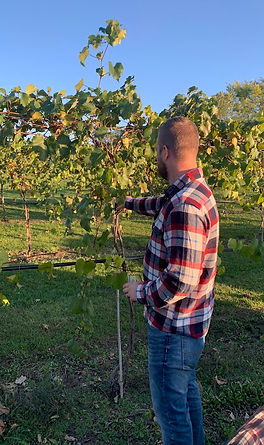
I (Tyler Bertsch) started Prairie Viticulture because I couldn’t stop thinking about grapes. I still can’t. I farm a little less than 3 acres of grapes north Lincoln, NE. I am also a graduate student at UNL who runs multiple experiments on various grape cultivars.
Like H. W. Furnas once wrote, I suppose I have “grapes on the brain.” The more I read, the more I realized that prairie viticulture isn’t a modern experiment—it’s an unfinished one. We’re not starting from nothing. We’re picking up a thread that was dropped.
This site exists to:
-
Dig up what was tried before, honestly and without nostalgia
-
Record what works, what doesn’t, and why
-
Test ideas in real prairie conditions, not ideal ones
-
Respect the failures as much as the successes
I’m not here to sell perfection. I’m here to document persistence.
Why We Still Love It
Because despite everything—the insects, the plagues, the droughts, the freezes, the laws, the losses—grapes still grow here, offering flavors unique to our corner of the world.
They grow along rivers and on hillsides.
They grow where someone once believed they might.
They grow because people refuse to stop trying.
Prairie viticulture demands patience, humility, and a willingness to fail publicly. But it also rewards those who pay attention. There is something deeply human about tending a vine in a place where it’s not supposed to survive—and watching it do so anyway.
This project is for growers, historians, experimenters, the quietly obsessed, and the people who want to take this region to the next level. It’s for anyone who believes the prairie still has a story to tell—if we’re willing to listen.
Welcome to Prairie Viticulture.
.jpg)