Patrick Pierquet - Grape Breeder/Winemaker/Frontenac Founder
Sept. 3rd 2026
DATE OF INTERVIEW:
INTERVIEW ID:
PV-MN-HIST-01
YEARS EXPERIENCE:
50+
STATE:
Minnesota
ROLE:
Breeder, Historian
CULTIVARS:
Frontenac
Tyler Bertsch sits down with viticulturist and plant breeder Patrick Pierquet to explore the origins of cold-hardy grape breeding in the Upper Midwest. Pierquet shares his journey from foraging wild Vitis riparia vines along Wisconsin riverbanks to pursuing graduate research at the University of Minnesota in the 1970s. The conversation highlights how Pierquet’s early field excursions—including tagging wild riverbank vines in Minnesota and collecting cold-tolerant selections as far north as Manitoba—helped establish key foundational germplasm for northern viticulture.
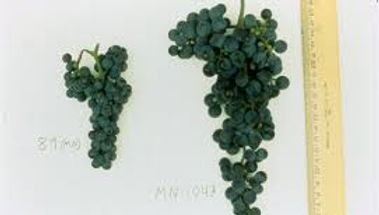
The interview dives into the development of iconic cold-hardy grape varieties, most notably 'Frontenac' (MN 1047), which Pierquet crossed using the wild selection Minnesota 89 and 'Landot 4511'. Pierquet reflects on working alongside legendary breeder Elmer Swenson, detailing Swenson’s practical selection methods, generous spirit, and lasting impact on Midwestern grape growing. Together, they discuss the technical realities of making wine from high-acid hybrid grapes, the unexpected discovery of color mutations like 'Frontenac Gris' and 'Frontenac Blanc', and how dedicated off-hours research laid the groundwork for today's thriving northern wine industry.
Tyler Bertsch: All right, Patrick, so tell me a little bit about your background and how you got involved with grape breeding and what brought you to the University of Minnesota.
Patrick Pierquet: Well, it’s kind of a long and winding road. As a kid, I was always interested in wild grapes. We lived on the edge of town in Green Bay, Wisconsin, and that was back before herbicides, and people actually had cows in the fields, and all the fences were covered with grapevines. Wild grapes. So it was very easy for my brother and I to go there in the fall and bring back a couple of pails of grapes, wild grapes, and these would be Vitis riparia, and then my mom would make jelly out of them. So that was my earliest exposure to grapes, to wild grapes. When I first went to college, I wasn’t thinking of grapes in that sense. I was studying natural resources management, and I graduated from the University of Wisconsin back in the early 1970s. And I graduated and I did not get a job in the field, so I took a job as a janitor for a year, trying to figure out what I wanted to do. At that time, I entered into correspondence with Elmer Swenson. To this day, I don’t know where I ever heard of him or how I ever heard of him, but he encouraged me to think about grape breeding and wild grapes, and we corresponded back and forth. That was before the internet, of course.
Tyler Bertsch: What year was this?
Patrick Pierquet: Early 1970s. Yeah, I graduated in 1969 from high school and went to the University of Wisconsin for four years and worked for another year after that. Then in 1975, I believe it was, I moved up to Minnesota to go to grad school to study plant breeding and grape breeding, and that’s how it all started.
Tyler Bertsch: Gotcha. So what was it like in the Upper Midwest viticulture-wise when you started in the late 70s?
Patrick Pierquet: There was really nothing. The very first winery and vineyard that went in, for instance, in Minnesota, was Alexis Bailly Vineyard. You probably heard of them; they’ve been there for a long time. What he did is he grew some of the French hybrids, and they would take them off the trellis and bury them in the soil in the fall, and then in the springtime, disinter them and put them back up on the trellis. So you can imagine that’s a pretty labor-intensive way of growing grapes. And that’s still done in some areas of the world, I believe, like in Mongolia or China. And if you’re growing non-winter hardy grapes, you really don’t have any other option. So yeah, and that was in the early 1970s. In fact, I helped David plant his vineyard and put in the trellis posts way back then. And they’re still going at it. His daughter took it over when he passed away, and then she recently sold it, she retired and sold the vineyard. So people are still doing it, but they’re still doing it the way they did it. But now they have Frontenac and a couple of the Swenson hybrids as well, so they don’t have to bury their entire vineyard.
Tyler Bertsch: Right, they have modernized options. So when thinking about the history of Frontenac and all of that, one of the parents was Minnesota 89, which is a selection that you had cut, right? You found?
Patrick Pierquet: Right. Vitis riparia, as you might know, is a species that favors wet soil, damp soil, and it really thrives along the riverbanks in the Upper Midwest. So I searched the riverbanks. I took a number of canoe trips down the Minnesota River. The Minnesota River flows east and west and meets the Mississippi River in Minneapolis. Anyway, I went upstream, and one trip with my advisor, my college advisor, and then a couple trips on my own, and the idea was to look through these grapes on the shoreline and take samples, which I did. And then I would label the grapevines with a tag with a little wire on it so I could come back later, and if I thought any of them were superior, I could come back and find that particular vine. And that’s where Minnesota 89 came in. It was the 89th wild grape that I numbered. And the reason I chose it was it had reasonable clusters for a wild grape, but also it turned out to be very high in sugar, and that’s the reason in Frontenac, it's progeny as well, and I thought that was a good sign.
Tyler Bertsch: How many vines did you number?
Patrick Pierquet: Well we know at least 89, right? I’d have to look at my old thesis. I would guess a couple hundred, but I can’t be sure of that. I also traveled up to Manitoba and made some selections of Canadian vines up there as well, on the idea that they would be earlier ripening, which proved to be true. They were quite early.
Tyler Bertsch: What were you looking for when you were looking for the right wild vine? Were you looking for cluster or architecture, berry size, disease resistance, sugar, acid? What were you prioritizing?
Patrick Pierquet: All of those things. But when you look at a grapevine that has grapes in the wild, you really can’t make a big judgment on the cluster because wild grapes are dioecious. There are male vines that contribute pollen to the air, and there are female vines that ripen the fruit. And so just because a wild vine might have a straggly cluster doesn't mean that it should be rejected, because it may be just because the pollination was not so good that year. So I had to make some choices and that sort of thing as I went along. So it was, yeah, if something was totally consumed by mildew or whatever, of course, I would pass by that. That made no sense. One of my goals was actually just to document the variability in fruit quality in a wild population. Given all this variability, that's why I took those fruit samples and brought them back to the lab and measured sugar, acid, and pH, so I'd have a record of that.
Tyler Bertsch: How much variance was there? Was it quite a bit?
Patrick Pierquet: Yeah, you can't rule out variance in exposure of the wild vine, too, because there might be a wild vine that has only partial sunlight all day long. So this was not a controlled environment study; this was a wild study. But what I do recall is that at the time I made these selections, it was maybe a little early in the season, but most of them were around 20 degrees Brix or a little bit lower. And that’s where vine 89 stood out because it was over 24 Brix at the time. And I thought, whoa. Yeah. And anyway, like I said, that high sugar content carried over into its progeny.
Tyler Bertsch: Was there any common features you found, like were they all pretty much along the river, or was that just where you were looking? Were they under bridges or just kind of anywhere?
Patrick Pierquet: I really didn’t look in the uplands or hills or anything because there were so many; I mean, the Minnesota River is just infested with wild grapevines. Pretty incredible. They're throughout the whole length; I’m sure there are thousands of wild grapevines growing there. So it was pretty easy. Like I said, I just collected the ones with the big clusters that I could reach, tagged the vine, and brought them back for analysis.
Tyler Bertsch: You also had what I found was Riparia 37 and 39, is that right? You had a couple other selections?
Patrick Pierquet: Those Riparia came from Manitoba. Riparia 37, 39, 54, I think, or 55. Anything in that numerical sequence there, those are all Manitoba selections. And what had happened, that was an interesting trip. I’m glad I did that because those couple of vines, particularly Riparia 37, played a really important role in a number of the Minnesota named varieties. And that was, I somehow got wind of a research station up in Manitoba at Morden, the town of Morden. And somehow I learned that they were growing a fence row of wild grapes. And the story was that one of the researchers there, he went as far north as he could find wild grapes. He went up into the Riding Mountain National Park in central Manitoba, and that’s the furthest northern population of Vitis riparia in the world. So he collected seeds and brought them back to Morden and grew them out on this long fence line, about half a mile long. And they never did anything with them. But I went up there and spent a couple of days and did exactly what I did with the Minnesota vines. I collected fruit, and I marked vines, tagged them, and brought the fruit back to Minnesota and analyzed it. And then I later went back up to Morden in the wintertime and made those selections.
Tyler Bertsch: Do you remember what 39 went into, which commercial varieties?
Patrick Pierquet: I’d have to look. There is a website; I don’t know if you’ve heard of it, it’s called Chateau... Oh shoot, I have to find it. Anyway, I can send you a link. And this fellow, Karl Camper, he’s a grape breeder as well. He’s an amateur; he’s retired now. One of his great passions is to document the full parentage of all varieties in the breed. And so you can go in there and look up and click on it and see where, for instance, Frontenac- he'll have a whole diagram of the parentage way back for several generations. But Riparia 37 was Elmer Swenson’s favorite vine once he observed it, and I used it quite a bit as well. It was very early ripening, very high quality, and ripened around late July. It had a good growth cycle; the wood would harden off, and it would lose its leaves before the Minnesota Riparia would even ripen. So you know it had a really short growth cycle, which is desirable in some cases. So 37, 39, 55, and 64 I believe were the ones I used, and you can see on Karl’s website, you can see the full parentage of all Minnesota varieties.
Tyler Bertsch: So at the time you performed the cross that became Frontenac, which I believe is MN 1047, what were the traits you were aiming for to combine with that wild Riparia and the Landot 4511?
Patrick Pierquet: I was reading everything I could get my hands on about the French hybrid grapes. They were and are really popular. Back then it was Philip Wagner, you probably heard the name, who wrote the Winegrower's Guide, and he described several dozen French hybrids. And I did not select Landot because I observed it; I selected it based on his recommendation and what he said about it in his book. It was reasonably early ripening, which I thought was good, and he described it as having a large cluster and large berry. I thought that was a nice complement because the Riparia clusters are small and their berries are very small. So this might prove to help the seedlings be a bit more productive and bigger clusters and Frontenac was selected because the cluster size kind of popped out of it. It’s really quite a productive vine.
Tyler Bertsch: How many progeny did you go through to get Frontenac?
Patrick Pierquet: Good question. I don’t really remember; I have to go back to my notes. But for some of the crosses that I made, there were only two or three seedlings, two or three progeny, for other crosses there were a couple hundred. Yeah, so it just depended on how successful I was in pollinating them. With wild grapes, it’s pretty simple. You just bag the cluster before the flowers open because the vines that yield fruit do not yield pollen in the wild. So you don’t have to really worry about self-pollination like you would with a commercial variety. So it was a simple matter just to bag the clusters before the flower opened and check on them, and when the caps fell off and the flowers opened, then just take the pollen that I’d been saving from other varieties and just dab it on the pistil and cover the cluster again and then harvest the fruit later.
Tyler Bertsch: Did the seedlings kind of perform how you expected in terms of vigor, fruit profile, or were they all over the place?
Patrick Pierquet: I didn’t have the ability to see many of them fruiting. I left the university job to take an industry job with an agricultural chemical company. So I only really worked at that job for like two or three years as a grad student. So I really didn’t... I really was just there during the initial stages. And I heard, I read about Frontenac soon in the news, and I don’t know if it was Peter Hemstad or Jim Luby perhaps that actually made the selection, but somebody had after I left, somebody had to continue caring for those vines, which they did. And somebody made that selection, and the rest is history with Frontenac.
Tyler Bertsch: Do you remember why you made that cross? Was there somebody saying, "Hey we need some commercial varieties," or what was the impetus behind even doing that?
Patrick Pierquet: My interest was solely in wine grapes. I had no interest in table grapes or seedless grapes or anything like that. That was Elmer Swenson’s job. He had no interest in wine. So anyway, I just focused on wine grapes. For the most part, I used French hybrids as what you’d call the quality parent in crosses with the wild Riparia. I rarely, I think I maybe only made one cross with a pure vinifera variety. People at the University of California Davis sent me some pollen in the mail. That was Carnelian, one of Harold Olmo’s new varieties, and he sent me some pollen. I used that to pollinate a couple of wild Riparia, but for the most part, the pollen parent in all cases was a French hybrid of one sort or another because they had more winter hardiness to begin with. I suspected that the University of Minnesota would follow through after I left. They did, and because they have a very, very long history of fruit breeding- apples in particular, but also strawberries and blueberries, all kinds of fruit. But there wasn't like an agency or anybody saying, "Hey, we really need some wine grapes." You just kind of were like, "Let's try to figure this out." Yeah, it was obvious if you were living in Minnesota, Wisconsin, or the Dakotas, it was obvious that the climate was inhospitable for even the hardiest of the French hybrids. So if grapes were going to be grown commercially, there had to be hardier hybrids developed. And it wouldn't do to just plant wild grapes because they're small productive and, like I said, they're dioecious, and they're very high in acid. So for all those reasons, that's why I chose the French hybrids to cross with them.
Tyler Bertsch: Was there anybody that worked with you on this, or were you kind of solo?
Patrick Pierquet: Actually, even when I worked full-time at the University Research Center, that was not a grape breeding position. They really had no money at the time designated for grape breeding. So I did a lot of that work, like putting in the trellis posts. There were a couple of grad students that helped me do that. We did that on weekends and in the evenings. But there was no money allocated at that time for grapes per se. It was all apples and blueberries and strawberries back then. But they just sort of looked the other way and let me use some of the land to put in a new vineyard. And as I said, it grew on from there.
Tyler Bertsch: Was there any siblings to Frontenac that were kind of promising?
Patrick Pierquet: There probably were, but like I said, I left before most of the seedlings got to the fruiting stage, so I did not really observe them.
Tyler Bertsch: That cross was in 1978, right?
Patrick Pierquet: I think that’s what I found, but that sounds about right.
Tyler Bertsch: Is there anything that kind of surprised you about how the Frontenac family has performed over the years that you've learned about?
Patrick Pierquet: Certainly, the two color mutations, Frontenac Gris and Frontenac Blanc, that was a surprise. It's very rare that a purple grape will mutate like that. There are a few cases, Pinot Noir and Pinot Gris. So that was a big surprise. And the fact that it became so popular right away just shows that people were itching to grow grapes up there in the North. So that was very rewarding to see.
Tyler Bertsch: If you were going to do a grape breeding program today, do you have any guidance on what would be a good parent, as far as cold hardiness or flavor? Because in your head, you just think, "Well this makes good wine; this one's colder and makes good wine; I'll just try those two," or are there certain things you kind of look for? Because not all good grapes will necessarily be good parents.
Patrick Pierquet: Exactly, exactly. Frontenac has been used as a parent. In fact, their latest introduction, called Clarion- you probably heard about that- is a white wine grape, isn’t fully hardy in Central Minnesota but quite hardy in Southern Minnesota. And that has Frontenac Gris I think as one of the seed parents. So Frontenac has been a good parent so far and shown up in the parentage of a number of other varieties. I think Itasca too.
Tyler Bertsch: So with the challenges of, sometimes the Riparia, depending on where you're at, can have some pretty high acid, high sugar. Did you ever, as a winemaker, how did you ever combat that, or just how did you in general deal with our northern hybrids? And then maybe kind of talk about your background with winemaking and that kind of stuff.
Patrick Pierquet: For a high-acid grape like Frontenac, several approaches: you can simply add some water to the crushed grapes, and that will dilute the acid down. In fact, Federal law allows something like 35% addition of water, and you could still call it by that grape name, and that’s precisely because many eastern grapes are very, very high in acid. If they’re so flavorful, you can’t really dilute the flavor. So in Frontenac, they would pick it at 26 or 27 Brix, so it would be very convenient to just add some water and bring it down to about 22 Brix, which is a good level for starting the fermentation, and then you have the added benefit of extending your yield and diluting the acid down. So that’s one way to deal with it. And then there are also chemical ways you can add potassium bicarbonate; there are various acid-reducing agents. But you run some risk there because it kind of upsets the balance, and the pH can go really high even though the acid is still high, and that’s not a situation you want because you could be inviting microbial spoilage in that case. And just in cooling the grapes, I worked at Ohio State University for 12 years as their winemaker. And typically what we do, and what commercial wineries do everywhere, is chill the wine for a period of time after fermentation, and that would precipitate a fair amount of the acid. You see these little crystals form at the bottom of the fermentation tank, and that reduces the acid as well. So that’s just a normal operation in just about every winery in probably the world, just chilling the wine.
Tyler Bertsch: Gotcha. Anything else, any other stories with Frontenac or winemaking that you’d like to share before I kind of get into the Elmer Swenson stuff?
Patrick Pierquet: Well, it’s interesting because Frontenac has been used in a number of different ways. There are a number of wineries that make a very sweet dessert wine, port-type wine from Frontenac. Once it’s fermented to maybe 20 Brix or whatever, then you add pure alcohol, ethanol, and that’s how port is made. It brings the alcohol up so high that the yeast can’t function anymore; they die, and so you’re left with a high alcohol wine that’s also high in sugar, high in residual sugar. And that’s what port is. A dessert wine like that. So Frontenac apparently has proven to be very good at that, tremendous color and a lot of flavor.
Tyler Bertsch: I had read it was because, and I may be mispronouncing, but I think it’s like a diglucoside instead of a monoglucoside like vinifera. Like it has two anthocyanins or something like that, it’s like unbreakable. The color is like unbreakable or something like that.
Patrick Pierquet: Yeah, a lot of French hybrids are like that because of the chemistry of the native North American grapevines. In these French hybrids, they did not use Riparia so much; they used Rupestris, Lincecumii, and Cinerea and a few of the other species. But all of the North American wild grapevines have that interesting pigment that’s different than the Vitis vinifera pigment.
Tyler Bertsch: All right, so you worked with Elmer. You first heard about him when you were how old, you said?
Patrick Pierquet: I was just graduating from college. I was 21 years old. And we started corresponding, and that’s... he was a big stimulus for me to change my path from natural resources to fruit breeding. So he was just fascinating. I’d go up to his vineyard in Wisconsin, maybe a three or four hours drive from Madison.
Tyler Bertsch: Beyond the formal breeding records, what were Elmer's day-to-day methods for evaluating grapes and vine health and stuff like that on his farm that's not necessarily in literature?
Patrick Pierquet: Pretty simple and uncomplicated. He just like any breeder, he spent day after day walking through the seedling area and observing the fruit and tasting and that sort of thing and putting a red flag on the bad ones, meaning "pull this one out," and putting a green flag on the ones he wanted to propagate further.
Tyler Bertsch: Would he ever limp the weak ones along just because they had a good trait and then backcross them, or did he just if they were just weak at all he just kind of get rid of them?
Patrick Pierquet:. So you’re looking for the superior individual vine and then you propagate that. Right. And like I said, Elmer had no interest in wine, so his choice of parents reflects that as well. He used quite a number of the Cornell table grapes as one of his parents. And in fact, his most widely used seed parent was Minnesota 78. It was from the early Minnesota... Minnesota had a little bit of grape breeding back in the 1940s, and in fact they introduced several varieties. And the reason Elmer used Minnesota 78 is that it was a female vine that did not produce pollen so it was very easy to cross. And it was super early in ripening and super hardy. And so he used that as his seed parent in a lot of his crosses like Edelweiss. Edelweiss is a white grape that has Minnesota 78 as one of the seed parents.
Tyler Bertsch: Was there anything that when he was walking through there that he had kind of an intuition on that a formal geneticist would have missed? Like did he ever tell you, "Oh, you want to make sure it always has this many leaves or shoots out this fast?" Was there anything like that kind of put-your-finger-in-your-mouth-hold-it-in-the-wind type thing he just knew it would work?
Patrick Pierquet: No, there wasn’t anything special. It was just straightforward. Like I said, you just sample the varieties, and you want to sample at several stages of ripening too, because some varieties- and Edelweiss is one- if it gets overripe, it becomes obnoxious and labrusca. And so when we made wine from Edelweiss at Ohio State, I always picked the grapes at about 14 Brix, what's called the early ripe stage. So it had the Edelweiss flavor, but it had not reached the point where it started tasting obnoxiously labrusca.
Tyler Bertsch: Did he look at disease, or did he look at cold? Did he have like a point system or did he just kind of if it didn't make the cold, it died and then go from there?
Patrick Pierquet: I think that’s one of the first things he did in the springtime was check any of the seedlings that looked like they were badly winter-damaged, and they’d be yanked out even before they started growing, because there’s no sense having a non-hardy seedling because that’s one of the biggest criteria for Wisconsin and Minnesota is cold hardiness. So yeah. And the rest is for quality. And of course, like I said, with disease resistance, I don’t think Elmer had any formal point system or anything like that, but I think if a vine was heavily diseased, he would yank that as well. But that's kind of a subjective experience, you know, as to what might be called heavily diseased.
Tyler Bertsch: Yeah, because some of them will show black rot on the leaves but not as much on the clusters. And then some of them, all of a sudden, the clusters just have all kinds of damage, and you didn’t really see it coming. Maybe walk me through if you went there on a weekend on his farm in Osceola, what was it like? What were the things he did, or how did he go about his day in regards to breeding?
Patrick Pierquet: Well, just so you get the little story, he was working at the University of Minnesota Research Center where I eventually ended up, but he was not a grape breeder at the University of Minnesota. Like I said, they had no funds allotted for grapes. So he was kind of an orchard technician; he cut grass and sprayed herbicide and pruned the apples and that sort of thing. And then on weekends, he’d drive back to his house in Wisconsin, and that’s when he’d do his vineyard maintenance because he had the seedlings growing in Wisconsin. Although he did have a few vines growing in Minnesota, that’s where he could make his crosses as well. But like me, his grape-breeding work was after hours because it wasn’t really sanctioned by the university back then. He was kind of doing it all after hours or did anybody help him on weekends, or as he started to age? He was lucky enough to be able to use some of what they called propagation beds at the University of Minnesota. These are big; maybe you’ve seen them. They’re raised beds about a foot deep with pure sand, and they have mist sprayers over the top. And that’s the way to rapidly and reliably root grapevines. You just stick a short cane in there, and they root from the bottom because the bottom is heated as well. And the university rarely needed all of their space for their own program, so Elmer was able to do some propagation there in the university propagation beds. And then he’d bring them once they rooted, he’d bring them home to Wisconsin and plant them in the seedling vineyard.
Tyler Bertsch: What motivated him? He did this for how many decades?
Patrick Pierquet: Well, what motivates anybody who’s fascinated by one thing or another? I don’t know, he was a dairy farmer for his whole life. And one thing he said to me, you can quote him on this, he told me when they offered him the job at the University of Minnesota and then he was able to sell off his cows and all the dairy equipment and that sort of thing, and he said it was the happiest day of his life. Because back then, it was not all that automated and it’s a lot of hard work in dairy farming back then and even today. So he was happy to dispense with all his cows and that sort of thing.
Tyler Bertsch: I had read that he read T.V. Munson’s book or something, and that was his big inspiration.
Patrick Pierquet: Yeah, that was his big inspiration, as it was mine as well. And yeah, for whatever reason, he just was fascinated. Some people are fascinated with apples and others are fascinated with grapes. It's interesting.
Tyler Bertsch: Was he pretty good about handling failure and that kind of stuff? Was he pretty kind of took it on the chin and kept going when winters would wipe out a bunch of his nursery stock or any of his cuttings?
Patrick Pierquet: I’m sure he was, because he kept at it until he was in his 90s. He did this grape breeding for decades. I don’t think he was discouraged by having some of them die back; that’s just part of the game.
Tyler Bertsch: Was he pretty open with sharing the germplasm or different cuttings with people?
Patrick Pierquet: Oh yeah, unbelievably open. He sent cuttings to anybody and everybody throughout the United States. Anybody who would write to him, particularly his Edelweiss and Swenson Red, those two table grape varieties.
Tyler Bertsch: Were those his favorites? Or those you think he thought were most commercially viable?
Patrick Pierquet: Those were the two that were, they were kind of jointly named by Elmer and the University of Minnesota because they seemed to have the most promise. They were both very productive and very delicious table grapes. Swenson Red is really quite tasty. It’s very much like a standard California table grape except it has seeds. It’s not a seedless grape. But oh my, it has a good fleshy texture, you really crunch into it, and it’s just delicious. And Edelweiss is more liquid in the center, but it sort of falls apart in your mouth and all the juice comes out and it’s really tasty. But Edelweiss has to be picked early, as I said. If you harvest it a little bit earlier when it still has a balance of flavor, it actually makes a really nice wine and there still are some commercial wineries, I think, in Nebraska and Iowa, that make an Edelweiss. Yeah, it’s funny I ask people at work or different places sometimes, "Do you know what Riesling is?" and they go, "No idea." I say, "Have you heard of Edelweiss?" and they say, "Yeah." And you might laugh at that, but some people in rural Nebraska are more familiar with Edelweiss just because James Arthur- that was one of their big ones when they first started out and a lot of wineries around here always had that. It’s probably the most brand recognition.
Tyler Bertsch: Did he have any varieties he was really excited about, or was those kind of it? Do you remember if he had some that were like his babies?
Patrick Pierquet: There were maybe half a dozen more that were named in addition to the Swenson Red and Edelweiss. St. Croix, St. Pepin, La Crosse, Brianna, Louise. All these varieties, mostly they were named by people elsewhere in the United States who Elmer would send cuttings of these experimental varieties before they were even named. They just had a selection number. And so if they proved to be really good, like in New Hampshire, I think that’s one of the places where Edelweiss was being grown, and a few other places. And eventually about six or eight of his other selections achieved naming and are grown and sold under those variety names still.
Tyler Bertsch: Were there any varieties that he showed you that you were like, "Oh, these will be great," and then he was like, "Ah, I’m not going to release it?" I know like Adalmiina I think is the recent one now that people are starting to use, but that didn’t have any traction for a long time.
Patrick Pierquet: No, there wasn’t anything in particular. A couple of his what we call advanced selections made outstanding wine, his 282 and 283. But they were pistillate, they were not perfect flower, and that would never go as a commercial variety. You need to have a perfect flower grapevine in order to plant it commercially because you plant it in big blocks of one variety and if you had a pistillate vine in those conditions, a lot of the pistils would not be pollinated because they’re too far away from pollinating vines.
Tyler Bertsch: Did he ever try them for wine quality or was that kind of... I know you said his original purpose was table grapes, but did he as time went on make wine from them or give them to people to evaluate for wine?
Patrick Pierquet: He never made wine. He wasn’t interested in it and never did that. But he would give away, once he had maybe half a dozen vines of the same selection, then he might give somebody, a winery or myself or at the university, whatever, give them a couple hundred pounds of grapes and tell them, "Go ahead and make wine from these and tell me what you think." So a lot of his, in fact all of his varieties that were made into wine were not made by Elmer. He had no interest or skill in winemaking at all.
Tyler Bertsch: I had another question I was trying to remember what it was. Oh, what are- I guess you used to go to his farm once in a while, right? Or you just met him at the university? What was your relationship with him?
Patrick Pierquet: Before I left Madison, I visited him up on his farm a couple of times and just kind of checked things out. And then when I finally moved to Minnesota, and he was right there at the research center, then myself and one or two other people would help Elmer on weekends with pruning and trellis posts and just stringing the trellis wire and weeding the seedling vineyards. Gave him a hand on weekends.
Tyler Bertsch: You have any fun memories you’d like to share, kind of stories or anything like that that maybe are kind of humorous or interesting?
Patrick Pierquet: Elmer, he lived in the old farmhouse there, and they had a fuel oil-burning stove as a heater inside his kitchen. It always smelled like fuel oil. Just an old-fashioned old furnace. We got along well, and I enjoyed all the visits I made with him up there. And like I said, occasionally somebody else would go with me. There’s a guy, David McGregor, who lives kind of north and west of Minneapolis, and he used to have his own vineyard, and he would also help Elmer on weekends as well. Right now David McGregor and his wife grow flowers and vegetables on their farm. I don’t think he has any grapes anymore. But he was another one who worked with Elmer as well.
Tyler Bertsch: All right. I don’t have any more questions. Thank you so much!
Patrick Pierquet: No Problem. I enjoyed it!